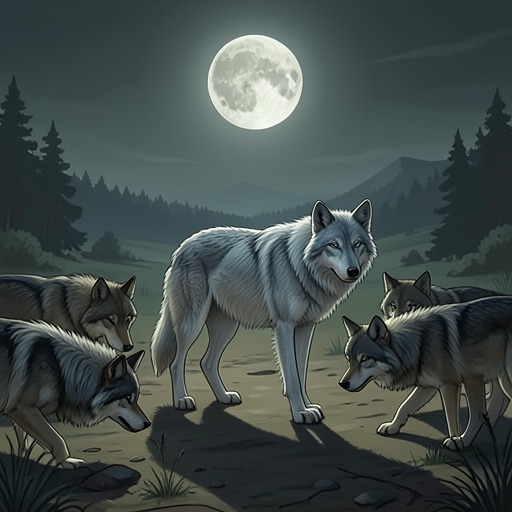
Alan accidentally marks Sierra
Broken Rejected MateAlan accidentally marks Sierra during an intimate encounter, transforming a moment that begins as mutual desire into a crisis of bodily control, fear, and supernatural revelation. The mark is not planned or deliberately claimed; it happens when Alan’s wolf overtakes his conscious restraint, and its immediate consequences expose how profoundly their relationship is governed by forces neither partner fully understands.
Immediate Consequences and the First Shift
The mark changes the encounter from intimacy into alarm. Sierra immediately pushes Alan away, rises to her feet, and grips the injured place on her neck while shock and surprise cross her face. Alan stands as well, raises his hands in a calming gesture, and admits that he lost control and did not mean to mark her. His apology does not undo the physical act: Sierra is breathing rapidly, her eyes are wide with fear, and she angrily tells him that he should not have done it. The scene therefore gives the mark an unmistakable ethical charge. Alan experiences it as an unintended surrender to the wolf within him, but Sierra experiences its consequences in her own body, where desire has abruptly become violation and danger.
The mark also precipitates a second, more startling revelation. Sierra’s eyes begin to glow, and Alan stops speaking when he notices the change. She tells him that she is turning and demands a basement or another safe place, while Alan stares upward in disbelief because he believes that a first shift cannot occur without a full moon. A low, guttural growl then rises from Sierra’s throat as the glow intensifies. The supernatural event is thus presented through bodily signs before either character can explain it: the eyes, the growl, and the rapidly escalating need for containment make her transformation tangible before it becomes intelligible. Alan’s accidental marking is consequently not an isolated mistake; it becomes the immediate trigger or revelation point for Sierra’s unprecedented first shift, placing both partners inside a crisis that overturns their assumptions about her identity and the rules of their world.
Desire, Restraint, and the Body’s Unintended Language
The incident exposes a conflict between Alan’s spoken intention and the body that acts before intention can govern it. He draws Sierra onto his lap because he wants her closer and believes her desire matches his own. He promises that they will only kiss, but the promise lasts only until physical contact awakates the wolf within him: his hands pull her nearer, his mouth becomes more forceful, and his attention shifts from a bounded kiss toward a desire to remove her clothes. The escalation is not described as a calculated decision. Alan recognizes that he is no longer fully in control only after the wolf has taken over the encounter, making the mark the most consequential expression of a bodily impulse that his conscious self failed to contain.
The bite also gives the relationship a visible sign before either partner has agreed to what that sign means. Alan’s teeth scrape the place where Sierra’s neck meets her shoulder, then break her skin and draw blood. The sensation produces an almost euphoric response in him, while the same act produces shock and fear in Sierra. That contrast makes the mark more than a romantic emblem: it is a contested inscription, carrying one meaning for the instinct that makes it and another for the person who bears it. Alan’s immediate apology acknowledges the gap between impulse and consent, but his confession that he did not mean to mark her also confirms that the act has exceeded the promise with which the encounter began.
Within the larger development of the relationship, the mark becomes the first physical event to force private attraction into supernatural consequence. Later, Alan assures Sierra that anyone seeking her will have to go through him and that he will fight to the death, while Sierra chooses to join his pack despite his initial refusal. Their bond eventually culminates in mating as wolves, when they become joined body and soul, and their acceptance by the pack is sealed through the traditional run. Those later developments give the accidental mark a retrospective importance: it is an unstable beginning to a bond that will eventually become mutual, embodied, and socially recognized, but it first reveals that intimacy between them cannot be separated from wolf instinct, danger, and the need to negotiate protection with Sierra’s own agency.
From Uncontrolled Mark to Chosen Bond
The later course of Sierra Langford and Alan Lowell’s relationship does not erase the violence of the accidental mark; instead, it places that breach within a longer movement from involuntary bodily power toward conscious commitment. When Alan’s pack members arrive at Sierra’s home, he keeps hold of her hand and promises that anyone who wants her will have to go through him, even if protecting her costs him his life. His response turns the fear generated by the mark into a protective obligation, but the story continues to test whether protection can coexist with Sierra’s right to choose. When the question of joining the pack arises, Sierra declares that she wants to join, while Alan immediately refuses because he is still trying to keep her safe. Her insistence prevents the relationship from settling into a simple protector-and-protected arrangement: the woman who was unexpectedly marked also claims authority over her own place in the supernatural community.
The mark’s consequences are further complicated by Sierra’s transformation into a figure whose power cannot be treated as merely an extension of Alan’s. In a later confrontation, she is urged to remain behind the scenes because a Dysomnia is almost divine and must use extraordinary powers responsibly rather than enter wars that did not begin with her. This counsel places the original incident within a broader question of restraint: Alan’s wolf once acted before his judgment, while Sierra must learn to govern a power capable of changing the balance of an entire conflict. Her body is repeatedly presented as a site where identity, danger, and responsibility meet, but the narrative increasingly makes control an achievement rather than an assumption.
The relationship finally reaches a deliberate form that the accidental mark could not provide. Sierra and Alan shift as wolves and consummate their union, becoming joined body and soul; afterward, they take part in the traditional pack run, where Sierra feels accepted as one of the pack. This ceremony contrasts sharply with the earlier private bite. The mark occurs in an enclosed moment of escalating desire, without agreement and followed by shock; the run occurs in community, after mutual commitment, and gives Sierra a recognized belonging. The narrative therefore moves from an involuntary inscription on Sierra’s body to a bond affirmed through shared action and collective acceptance.
That progression eventually extends into leadership. Alan asks Sierra whether she truly wants to become his alpha female, acknowledging that remaining with him will mean accepting a major change in her life. Sierra agrees because she sees his desire to become Alpha and chooses to support the future they can build together. By nightfall, the two are officially the Alphas of the Blue Blood Pack, a position neither expected Sierra to occupy when the mark first exposed the dangerous instability of their intimacy. The event consequently functions as an early rupture whose meaning changes over time: it begins as a failure of restraint, leads into questions of consent, protection, transformation, and agency, and is ultimately answered not by treating the mark as proof of possession but by constructing a bond in which Sierra can choose membership, bodily union, and shared authority.